

by Natalia Menendez
Up to 75% of people with cancer or cancer survivors may experience “brain fog,” a term commonly used to describe cancer-related cognitive difficulties1. Although also referred to as “chemo brain,” these cognitive difficulties can result from several contributing factors, even in those who have never received chemotherapy. It can show up as forgetfulness, difficulty concentrating, losing your train of thought, trouble finding the right word, or feeling mentally slower than usual. Generally, brain fog is an umbrella term for changes in thinking and mental clarity (Figure 1).
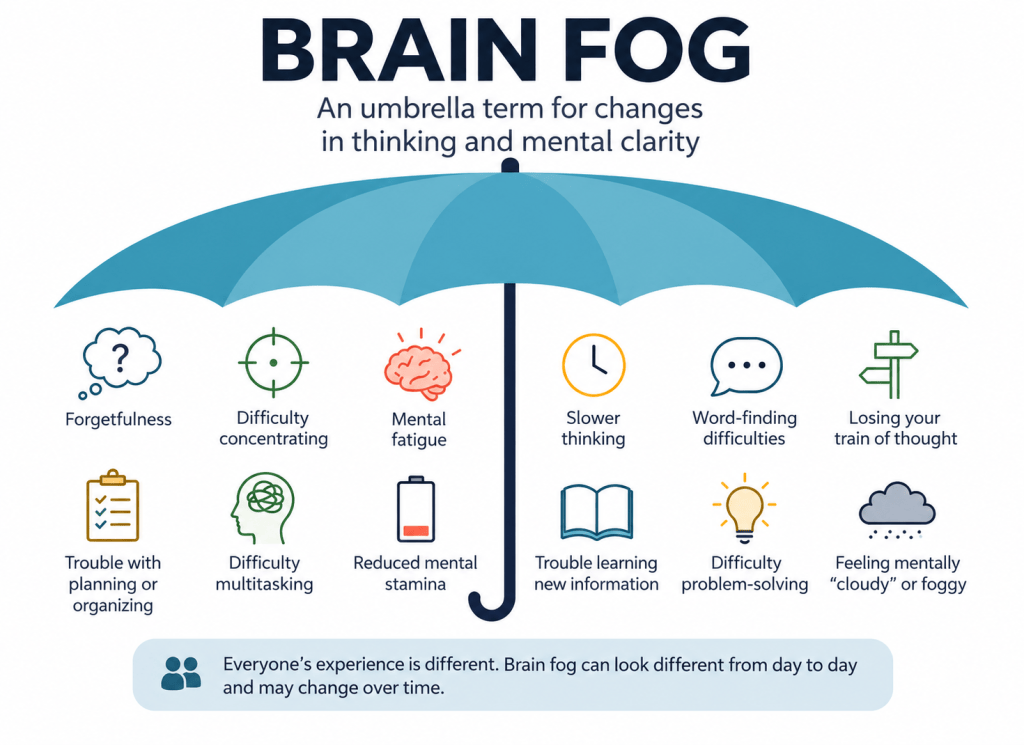
Figure 1. Brain fog as an umbrella term for various cognitive symptoms. AI-generated image.
The term “chemo brain” emerged as patients and clinicians began recognizing cognitive changes associated with cancer treatment, including difficulties with memory, attention, concentration, and processing speed2. These abilities make up what we call cognition, which is our capacity to think, learn, remember, focus, solve problems, and manage everyday tasks. For many years, chemotherapy was considered the primary cause of these symptoms.
Today, we know the picture is more complex. While chemotherapy can contribute to brain fog, it is not the only factor involved. Brain fog can occur before treatment begins, during treatment, or persist after treatment3, 4. Neuropsychology can help us look more closely at why these cognitive symptoms can occur and why they may affect people differently.
Understanding brain fog through Neuropsychology
Neuropsychology is the field that sits at the intersection between psychology and neurology. It examines how physical changes in the brain influence the way we think (cognition), feel (emotion), and function (behavior) in everyday life. From a neuropsychological perspective, cognitive symptoms can vary in severity and across cognitive domains, with some people reporting subtle difficulties and others experiencing symptoms that interfere with everyday functioning4, 5. This perspective is particularly helpful when thinking about cancer-related cognitive changes because it encourages us to look beyond the symptom itself and consider what may be contributing to it.
Since the symptoms associated with brain fog can have different contributors, the experience can look different from person to person5. Some people notice subtle changes, like occasionally forgetting why they walked into a room or needing more time to find the right word in conversation. Others describe feeling mentally slower, having trouble multitasking, or finding that a task that once felt automatic now requires significantly more effort. Broadly speaking, these experiences can be grouped into common symptoms such as forgetfulness, difficulty concentrating, losing your train of thought, slower processing speed, word-finding difficulties, and challenges with planning or organization. For some individuals these symptoms may be mild, occasional or temporary, while for others they can interfere with work, school, relationships, and everyday responsibilities2. Mental fatigue can also accompany these symptoms, but its relationship with brain fog is more complex.
Mental fatigue and brain fog can be difficult to distinguish because they can overlap and affect some of the same cognitive abilities6. Feeling mentally exhausted can make it harder to concentrate, process information, and think clearly, and cognitive difficulties can add to the mental effort required to complete everyday tasks6. One example of why this distinction matters is memory. When someone is experiencing brain fog or mental fatigue, they may feel like their memory is getting worse or that something is wrong with their memory. However, difficulty remembering something does not necessarily mean that memory is the primary cognitive ability being affected5, 7. Mental fatigue can make it harder to concentrate and think clearly, while brain fog can affect abilities such as attention, processing speed, and organization, all of which can make it harder to remember information.
Recognizing these differences is important because understanding what may be contributing to a difficulty can be a useful first step toward identifying opportunities to address it. A neuropsychological perspective can help us do this by examining how changes in the brain may relate to specific cognitive abilities and how these changes can affect everyday functioning.
How brain fog can happen
Because brain fog describes a range of cognitive symptoms rather than a single condition, there are several ways these symptoms may develop. Researchers have identified a number of factors that may contribute to cancer-related brain fog, including direct effects on the brain, physical and cognitive demands that reduce available mental resources, and psychological and emotional factors5, 8, 9, 10). These factors can be understood through three overlapping pathways (Figure 2).
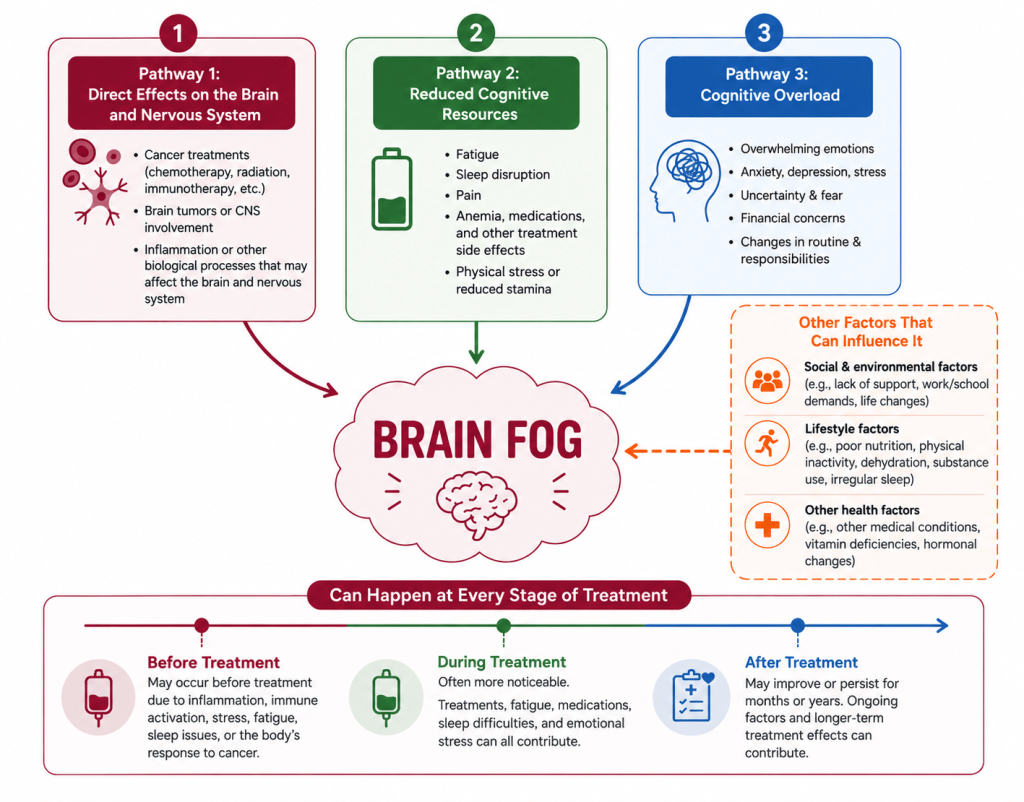
Figure 2. Mindmap of different contributors to brain fog. AI-generated image.
Pathway 1: Direct Effects on the Brain and Nervous System (CNS involvement, treatment-related effects)
In some cases, the brain and nervous system may be directly affected. This can occur when cancer involves the central nervous system (CNS) or through treatment-related effects on the nervous system. Biological processes such as inflammation and immune system activation may also contribute to cognitive symptoms by affecting the brain and nervous system5, 8. When brain networks involved in cognition are affected, individuals may experience measurable changes in cognitive functioning5, 8. Depending on the regions involved, this can contribute to different cognitive difficulties.
Pathway 2: Reduced Cognitive Resources (fatigue, pain, physical stress)
Not all brain fog results from direct impact to the brain. Thinking requires mental resources, and when those resources are depleted, thinking can become more difficult. Cancer-related fatigue is commonly associated with cognitive difficulties5, 6. Sleep disruption, chronic pain, anemia, medication side effects, and the physical demands of treatment can all reduce the mental resources available for attention and memory4, 5, 10. In these situations, a person may experience greater difficulty using cognitive abilities effectively, even when formal cognitive impairment has not been established5. For example, someone experiencing severe fatigue may feel as though their memory is worsening when difficulty focusing on information in the moment makes it harder to remember later.
Pathway 3: Cognitive Overload (overwhelming emotions, mental health)
A third pathway involves cognitive and emotional overload. A cancer diagnosis can introduce uncertainty, stress, medical decision-making, financial concerns, changes in routine, and fears about the future. These experiences can place additional demands on attention and memory. Anxiety, depression, and psychological distress have also been associated with cognitive symptoms in people with cancer3, 5, 6. These factors may make it more difficult to concentrate, process information efficiently, and manage cognitively demanding tasks5, 6. These psychological and emotional factors can meaningfully affect how people experience and function with cognitive symptoms3, 5, 6.
It is important to remember that, in this article, we are referring specifically to brain fog associated with cancer. Because cognitive symptoms can have many possible contributors, persistent, new, or worsening symptoms should be discussed with a healthcare provider rather than automatically attributed to cancer-related brain fog4, 5.
When brain fog can happen
One common misconception about brain fog is that it only develops during or as a result of chemotherapy. In reality, cognitive symptoms can occur before, during, or after cancer treatment3-5, 9.
Before Treatment: Some individuals report cognitive symptoms even before receiving their first treatment3, 9. This may be related to the cancer itself, particularly when cancer directly involves the central nervous system or when biological processes such as inflammation and immune system activation contribute to cognitive symptoms5,8, as described in Pathway 1: Direct Effects on the Brain and Nervous System. At the same time, receiving a cancer diagnosis can bring stress, uncertainty, and a range of emotional demands that contribute to cognitive overload (Pathway 3: Cognitive Overload).
During Treatment: Brain fog can become more noticeable during active treatment. Chemotherapy, immunotherapy, and radiation therapy may contribute to cognitive symptoms through treatment-related effects on the brain and nervous system (Pathway 1: Direct Effects on the Brain and Nervous System), while fatigue, sleep difficulties, pain, medications, and the physical demands of treatment can reduce the mental resources available for thinking4, 5, 8, 10 (Pathway 2: Reduced Cognitive Resources). At the same time, the emotional experience can change as individuals navigate appointments, treatment decisions, side effects, and uncertainty about how treatment is progressing. These emotional demands can contribute to cognitive overload3, 5 (Pathway 3: Cognitive Overload).
After Treatment: For some survivors, cognitive symptoms improve shortly after treatment ends. For others, symptoms may persist over longer periods4, 8, 9. Ongoing physical recovery, pain, medication effects, and reduced stamina can continue to limit the mental resources available for thinking4, 5 (Pathway 2: Reduced Cognitive Resources). At the same time, adjusting to life after treatment can bring its own emotional demands, including uncertainty about the future, changes in identity or routine, and concerns about recurrence (Pathway 3: Cognitive Overload). As these factors change over time, the experience of brain fog may change as well.
Because brain fog can arise through multiple pathways, there is rarely a one-size-fits-all solution. Management may involve identifying and addressing the factors most likely contributing to symptoms4, 5, 8. Improving sleep, managing fatigue, staying physically active when possible, and addressing medical contributors with your healthcare provider may help support cognitive functioning4, 5, 10, 11. Many individuals also benefit from practical strategies such as calendars, reminders, written notes, and breaking larger tasks into smaller steps (4). Mental health is equally important: counseling, stress-management strategies, mindfulness-based interventions, and other psychosocial approaches may also help some individuals manage cognitive symptoms or the distress associated with them11, 12. The more informed we are, the better questions we can ask and the more appropriate support we can seek. It is important to discuss persistent cognitive symptoms with your healthcare team. In some cases, a neuropsychological evaluation may help identify specific cognitive strengths and weaknesses and provide recommendations tailored to an individual’s needs13.
Brain fog is not a single condition and is not caused exclusively by chemotherapy. It is an umbrella term for a range of cognitive symptoms that can arise from multiple biological, psychological, and treatment-related factors5, 8. Whether those symptoms stem from direct effects on the brain, reduced cognitive resources, or cognitive overload, they can have a meaningful impact on daily life before, during, and after treatment4, 5. Understanding the different pathways that contribute to brain fog can help make the experience feel less confusing and more manageable. Most importantly, it can help patients and survivors recognize that these symptoms are worthy of attention.
Disclaimer: No part of this article should be taken as medical advice. It is solely for educational purposes. Talk to your healthcare providers.
- Gu Q, Wang L, King TZ, Chen H, Zhang L, Ni J, et al. Seeing through “brain fog”: neuroimaging assessment and imaging biomarkers for cancer-related cognitive impairments. Cancer Imaging. 2024;24(1):158. doi:10.1186/s40644-024-00797-2. ↩︎
- Evens K, Eschiti VS. Cognitive effects of cancer treatment: “Chemo brain” explained. Clin J Oncol Nurs. 2009;13(6):661-666. doi:10.1188/09.CJON.661-666. ↩︎
- Scriney A, Gurren L, Gallagher P, Loughney L, Boran L. Pretreatment cancer related cognitive impairment and associated psychological factors: a systematic review. Front Psychol. 2026;16:1682455. doi:10.3389/fpsyg.2025.1682455. ↩︎
- National Cancer Institute. Memory or concentration problems and cancer treatment [Internet]. Bethesda (MD): National Cancer Institute; 2023 Jan 26 [cited 2026 Sep 13]. Available from: https://www.cancer.gov/about-cancer/treatment/side-effects/memory. ↩︎
- National Cancer Institute. Cognitive impairment in adults with cancer (PDQ®): health professional version [Internet]. Bethesda (MD): National Cancer Institute; [cited 2026 Sep 13]. Available from: https://www.cancer.gov/about-cancer/treatment/side-effects/memory/cognitive-impairment-hp-pdq. ↩︎
- Kim HJ, Abraham I. Determinants of the Higher Prevalence and Severity of Subjective Cognitive Impairment in Cancer Patients Compared to Healthy Subjects: Fatigue and Stress. Clin Nurs Res. 2021 Jul;30(6):809-817. doi: 10.1177/1054773820957474. Epub 2020 Sep 22. PMID: 32959682. ↩︎
- Wefel JS, Vardy J, Ahles T, Schagen SB. International Cognition and Cancer Task Force recommendations to harmonise studies of cognitive function in patients with cancer. Lancet Oncol. 2011;12(7):703-708. doi:10.1016/S1470-2045(10)70294-1. ↩︎
- Fleming B, Edison P, Kenny L. Cognitive impairment after cancer treatment: mechanisms, clinical characterization, and management. BMJ. 2023;380:e071726. doi:10.1136/bmj-2022-071726. ↩︎
- Dijkshoorn ABC, van Stralen HE, Sloots M, Schagen SB, Visser-Meily JMA, Schepers VPM. Prevalence of cognitive impairment and change in patients with breast cancer: a systematic review of longitudinal studies. Psychooncology. 2021;30(5):635-648. doi:10.1002/pon.5623. ↩︎
- Dang Z, Fan M, Zhang Y, Lu L, Gu J, Zhang C, Zhu P. Association between sleep quality and cancer-related cognitive impairment in patients with cancer: a meta-analysis. Front Neurol. 2026;17:1768687. doi:10.3389/fneur.2026.1768687. ↩︎
- Oldacres L, Hegarty J, O’Regan P, Murphy-Coakley NM, Saab MM. Interventions promoting cognitive function in patients experiencing cancer-related cognitive impairment: a systematic review. Psychooncology. 2023;32(2):214-228. doi:10.1002/pon.6073. ↩︎
- Cheng ASK, Wang X, Niu N, Liang M, Zeng Y. Neuropsychological interventions for cancer-related cognitive impairment: a network meta-analysis of randomized controlled trials. Neuropsychol Rev. 2022;32(4):893-905. doi:10.1007/s11065-021-09532-1. ↩︎
- Capetti B, Conti L, Ferrari MV, Coppini V, Ferraris G, Marzorati C, et al. Neuropsychological assessment in non-central nervous system cancer patients: a systematic review of cognitive screening and assessment within oncology practice. Health Psychol Rev. 2026;20(1):46-110. doi:10.1080/17437199.2025.2536071. ↩︎
Natalia Menendez, PhD Student
Values: Resilience, Empathy, Advocacy, Evidence-based, Curiosity
I was diagnosed with stage 4 blood cancer at 22 years old and, in the process, experienced significant cognitive symptoms and brain fog. As a result, I feel driven to advocate for accurate symptom recognition and for the importance of communicating these very real experiences with family, friends, and healthcare providers. I am now in graduate school studying clinical neuropsychology, which has helped me develop a deeper appreciation for health communication and its role in making complex health and scientific information accessible and meaningful to cancer patients and their loved ones. The intersection of cancer and neuropsychology is a unique opportunity to better understand what happens to the brain before, during, and after treatment. Being able to make sense of what was happening in my body from a medical standpoint helped me feel more comfortable advocating for myself and my needs. It also showed me how much more empowered we can feel when we have accessible information, which is why I believe there is value in making these conversations more open and sharing our experiences with others. In particular, I feel passionate about raising awareness of the unique challenges that come with facing cancer as a young adult. I founded Fourth SpaYce to make “SpaYce” for these conversations and help young adults connect with resources and support more easily.



Leave a comment