

Regular self-examinations are a simple yet powerful way to detect cancer in its earliest stages – before a small spark turns into a wildfire. As part of secondary prevention strategies, these exams can be performed in the comfort of our own home. Routine self-checks help us become familiar with our body, making it easier to notice any changes that may suggest the presence of an illness, and require medical attention to fully investigate. Self-examination strategies are available for early detection of skin, breast and testis cancer.
However, it’s important to remember that while self-exams promote body awareness which is fundamental for early detection, they are not a substitute for medical screenings. Self exams should always complement, not replace, recommended cancer screening when available. Any changes discovered during a self-examination should be reported to a healthcare provider right away.
Skin self-examination: how to care for our body’s largest organ
The skin is our body’s primary barrier to the external world, making it the most exposed and vulnerable organ. But how often should we check it? Monthly skin self-exams are generally recommended, though the frequency may vary based on personal and family history. This self-exam is especially important for individuals at higher risk, including those with weakened immunity, a history of skin cancer in their family, or numerous moles.
According to the American Cancer Society or a thorough skin self-exam, it is better to use a well-lit room and use both a full-length mirror and a handheld mirror to inspect the entire body. Since the skin is our largest organ, we should do it carefully and take our time. If a partner, friend, or family member is available to assist, even better – the more eyes, the merrier!
We should examine all moles, blemishes, and birthmarks from head to toe, as skin cancer can develop anywhere on the body, also on the scalp. Special attention must be paid to any new spots or changes in existing ones, as these could be early warning signs1, 2.
The ABCDE technique to detect Melanoma
Melanoma is the deadliest type of skin cancer, but the good news is that it is highly treatable when caught early3.
For early detection of melanoma, the American Academy of dermatologists4 suggest to follow the ABCDE-rule (Figure1):
- Evolving: The spot looks different from the rest or is changing in size, shape, or color over the past few weeks or months.
- Asymmetry: the shape of one half of the spot is unlike the other half.
- Border: The edges are often irregular, ragged, notched, or blurred in outline. The pigment may spread into the surrounding skin.
- Color: The spot has varying colors from one area to the next, such as shades of tan, brown or black, or areas of white, red, or blue.
- Diameter: watch out for moles size. Melanomas can be tiny, but most are larger than 6 millimeters wide (about 1/4 inch wide).
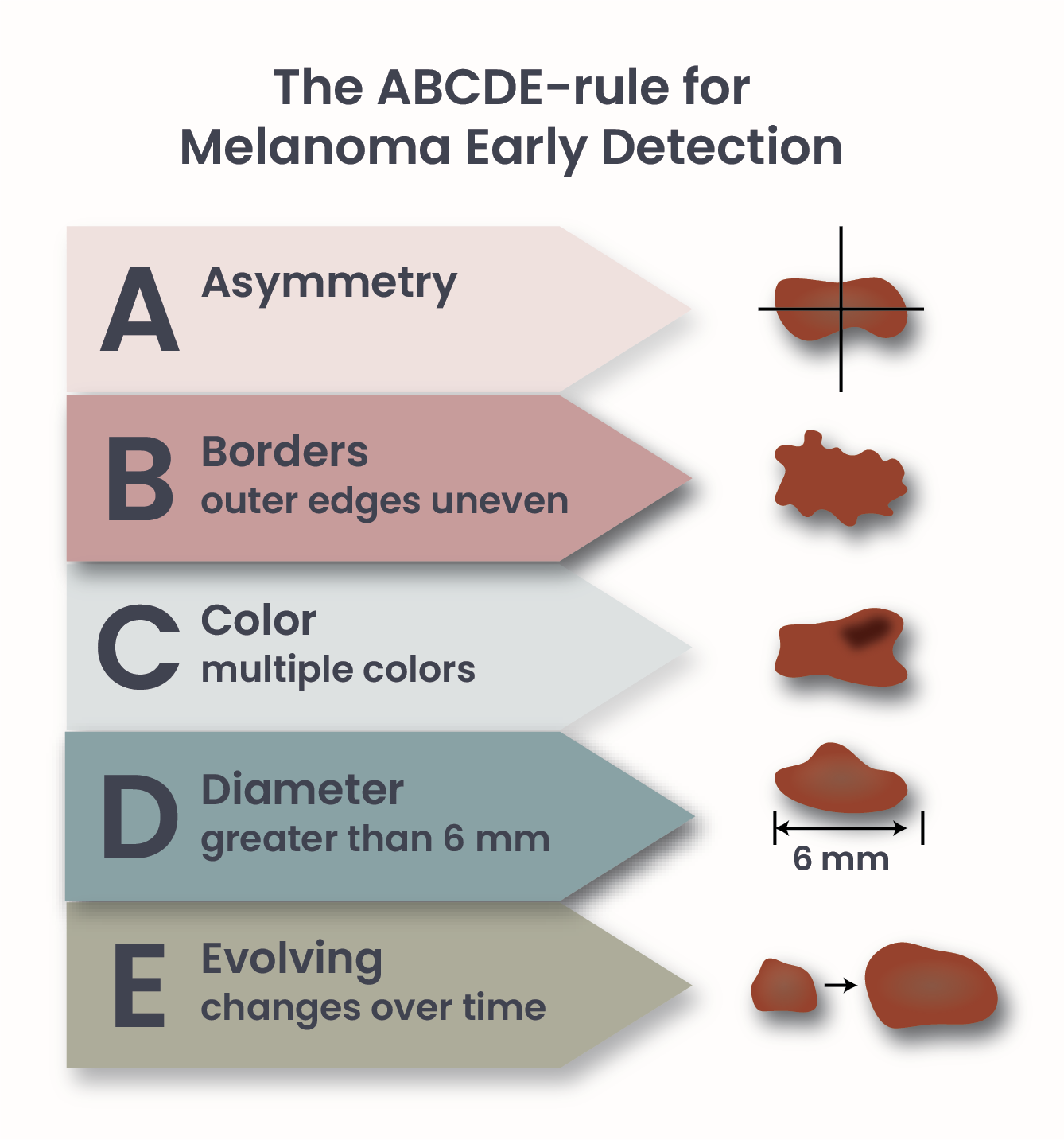
Figure 1. The ABCDE-rule: a simple way to guide Melanoma early detection
Breast self-examination (BSE): Ladies’ tool for healthy breasts
Breast cancer is the most common tumor among women and the second leading cause of cancer-related death in women worldwide5. However, the good news is that breast cancer mortality has steadily declined over the past 35 years (overall decline of 44% through 2022 in the United States). Early detection has played a key role in this progress. When breast cancer is caught at a localized stage -before it begins to spread – the five-year relative survival rate (the percentage of patients alive five years after diagnosis compared to the general population) is up to 99%6!
How to perform breast self-exams
The first step for breast cancer early detection starts with monthly breast self-exams (BSE). For women still menstruating, the best time to perform a BSE is a few days after their period ends, when the breasts are less sore and swollen. For those who are pregnant or post-menopausal, the specific day of the month is less important, but for consistency, it’s best to perform the exam on the same day each month.
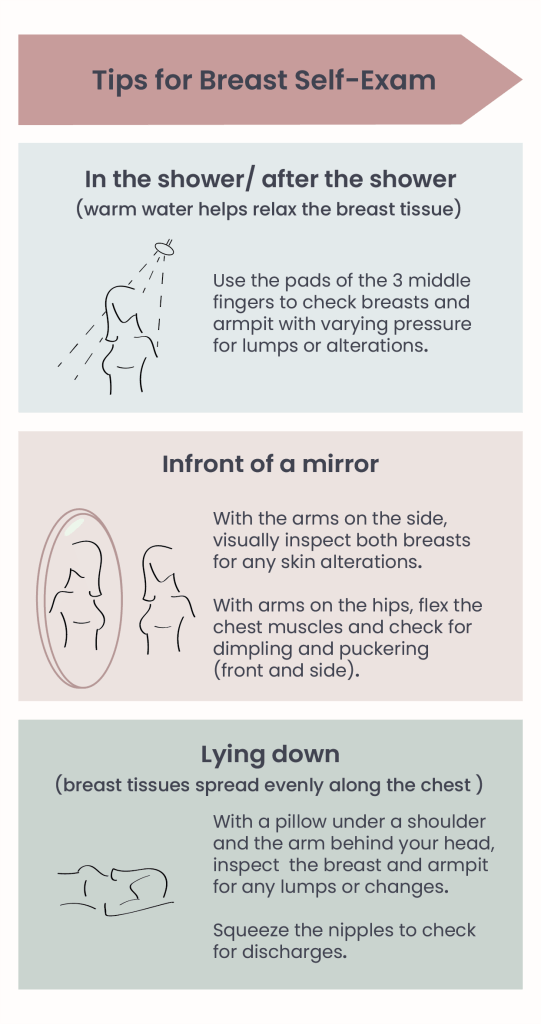
Figure 2. Indications for Brest Self-Exam.
What to look for during BSE:
- Breast lumps: small mass within the breast tissue or under the armpit. Breast lumps can vary in shape, consistency,and they can be painful or not. Some may be soft and movable, though it is more common for a breast cancer lump to be hard and stationary to the touch. Breast lumps are pretty common, but most of them are found to be benign (60-80%), so let’s remember not to panic, but it’s good to have it checked by a doctor right away7, 8.
- Changes to the skin: Dimpled, puckered, red, or scaly skin may appear on the breast.
- Pain: unusual pain or sensitivity in the breast area.
- Nipple changes or discharge: their nipple may turn inward or release discharges.
What about men? They also have breast tissues and they can develop breast cancer, even if it’s much more rare than women. To compare the numbers, the lifetime risk of a U.S. man developing breast cancer is about 1 in 726, while women 1 in 8.
BSE is generally targeted towards women, although it’s important also for men to keep an eye open and they can also perform regular BSE9. While rare, men carry a higher breast cancer mortality rate than women due to delayed diagnosis and treatment.
Testicular self-examination (TSE): Gentlemen’s tool for healthy testis
Testicular cancer is one of the most common cancers in young men. Fortunately, it has a high survival rate – 95% in the US population10. However, early detection remains crucial. An important tool to detect any abnormalities in testicles is testicular self-examination (TSE)11.
How to perform a TSE in 5 steps:
- Take five minutes during or after a shower. The warmth helps relax the scrotum and the muscles supporting the testicles, making the exam easier.
- Examine one testicle at a time. Gently roll the scrotum between your fingers to feel the surface of the testicle.You can also use a mirror to assist with the examination.
- Check for any abnormalities. Feel for lumps, bumps, or any unusual features. Monitor any changes in size over time, as testicular cancer can present as a painless mass or cause swelling in the testicles and scrotum.
- Pay attention to discomfort. Take note of any dull soreness or heaviness.
- Repeat on the other side.
It is recommended to perform the TSE once a month to track any changes. Keep in mind that in the back of each testicles (the part closer to the body) lies the epididymis, a coiled tubular structure where the sperms learn to swim (mature) and are stored. The epididymis may feel different from the rest of the testis and can sometimes be mistaken for an unusual mass.
TSE is a useful tool for detecting other testicular conditions that can cause significant discomfort and affect fertility, such as cyst, infections, varicocele (enlargement of the veins within the scrotum) and hydrocele (a buildup of fluid around the testis).
It may feel strange or uncomfortable to examine our bodies so closely – but that’s okay! Many people feel uneasy at first, but self-exams are a great way to become more familiar with your body. Over time, this awareness can help you notice changes even outside of formal examinations, which can be crucial for early detection.
- American Cancer Society. (26 June 2024), How to Do a Skin Self-Exam. cancer.org. Retrieved March 14 2025 from https://www.cancer.org/cancer/risk-prevention/sun-and-uv/skin-exams.htmlBerwick M, Begg. ↩︎
- CB, Fine JA, Roush GC, Barnhill RL. Screening for cutaneous melanoma by skin self-examination. J Natl Cancer Inst. 1996 Jan 3;88(1):17-23. doi: 10.1093/jnci/88.1.17. PMID: 8847720. ↩︎
- Curiel-Lewandrowski C, Chen SC, Swetter SM; Melanoma Prevention Working Group-Pigmented Skin Lesion Sub-Committee. Screening and prevention measures for melanoma: is there a survival advantage? Curr Oncol Rep. 2012 Oct;14(5):458-67. doi: 10.1007/s11912-012-0256-6. PMID: 22907282; PMCID: PMC3517928. ↩︎
- American Academy of Dermatology Association (n.d.), What to look for: ABCDEs of melanoma. aad.org. Retrieved March 10 2025 from https://www.aad.org/public/diseases/skin-cancer/find/at-risk/abcdes. ↩︎
- Wilkinson L, Gathani T. Understanding breast cancer as a global health concern. Br J Radiol. 2022 Feb 1;95(1130):20211033. doi: 10.1259/bjr.20211033. Epub 2021 Dec 14. PMID: 34905391; PMCID: PMC8822551. ↩︎
- American Cancer Society. (n.d.), Survival Rates for Breast Cancer. cancer.org. Retrieved March 20 2025 from https://www.cancer.org/cancer/types/breast-cancer/understanding-a-breast-cancer-diagnosis/breast-cancer-survival-rates.html. ↩︎
- National Breast Cancer Foundation. (23 March 2024), Breast Lump. nationalbreastcancer.org. Retrieved March 21 2025 from https://www.nationalbreastcancer.org/breast-lump/. ↩︎
- National Breast Cancer Foundation; revised by Lillie D. Shockney ( 6 Jan. 2025), Breast Self-Exam. nationalbreastcancer.org. Retrieved March 14 2025 from http://nationalbreastcancer.org/breast-self-exam/. ↩︎
- Richmond University Medical Center. (8 June 2022), Male Breast Cancer: Why Men Should Perform a Self-Exam. rumcsi.org. Retrieved March 22 2025 from https://www.rumcsi.org/news/male-breast-cancer-why-men-should-perform-a-self-exam/. ↩︎
- National Cancer Institute. (n.d.), Cancer Stat Facts: Testicular Cancer. seer.cancer.gov. Retrieved March 22 2025 from https://seer.cancer.gov/statfacts/html/testis.html. ↩︎
- John Hopkins Medicine. (n.d.), Testicular Cancer. hopkinsmedicine.org. Retrieved March 22 2025 from https://web.archive.org/web/20211021224933/https://www.hopkinsmedicine.org/health/conditions-and-diseases/testicular-cancer. ↩︎
© 2025 WithinOncology. All rights reserved.
This article, including all text, tables, and figures, is the intellectual property of WithinOncology and its contributors. Unauthorized reproduction, distribution, or use of any content without explicit written permission is strictly prohibited. For inquiries, please contact us via the contact form.

 Within Oncology
Leave a comment