

statistics
Cancer has a profound impact on society in the United States and around the world. Cancer statistics provide valuable insights into the overall burden of the disease by offering a snapshot of its impact on large populations at a given point in time.
These statistics help us understand key aspects such as the number of new cancer diagnoses and cancer-related deaths each year, the population of individuals living with a cancer diagnosis, the average age at diagnosis, and survival rates over specific periods. They also highlight differences in cancer incidence and outcomes across various demographic groups, including age, sex, race/ethnicity, geographic location, and other factors.
Analyzing cancer statistics over time allows us to identify trends and patterns, shedding light on changes in cancer risk, diagnosis, and survival rates for specific types of cancer as well as cancer overall. While these trends may not always directly apply to individual patients, they are crucial for policy makers, healthcare professionals, and researchers to assess the broader impact of cancer on society. This information is essential for developing effective prevention, treatment, and control strategies. Additionally, tracking statistical trends helps evaluate the success of public health initiatives and medical advancements aimed at reducing the burden of cancer.
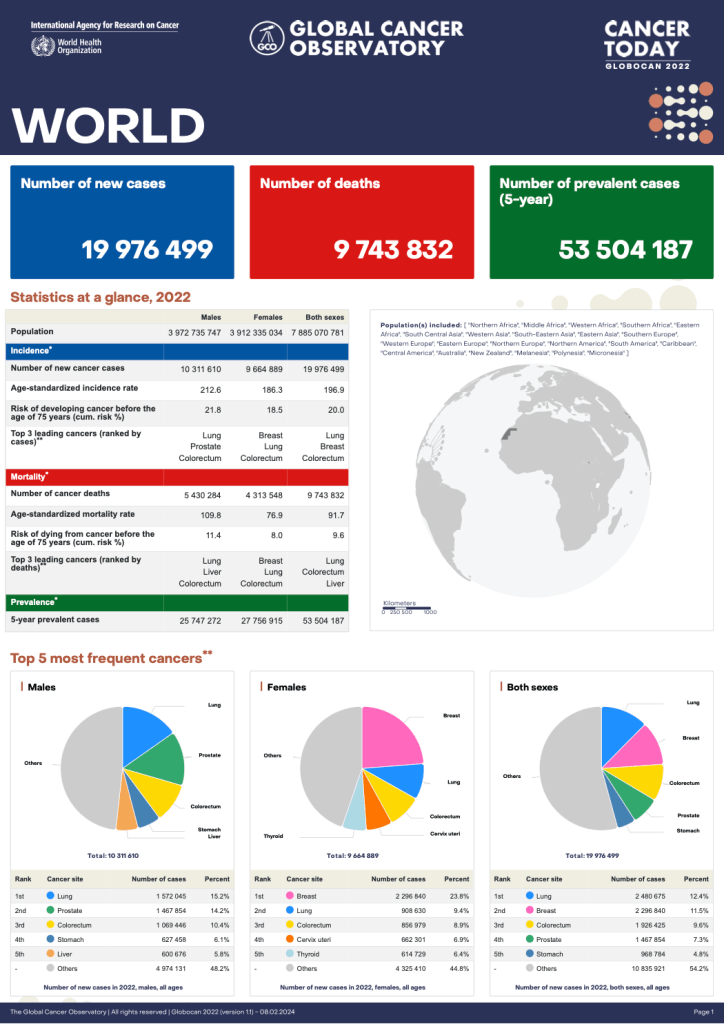
Statistics at a glance, 2022
Key Takeaways:
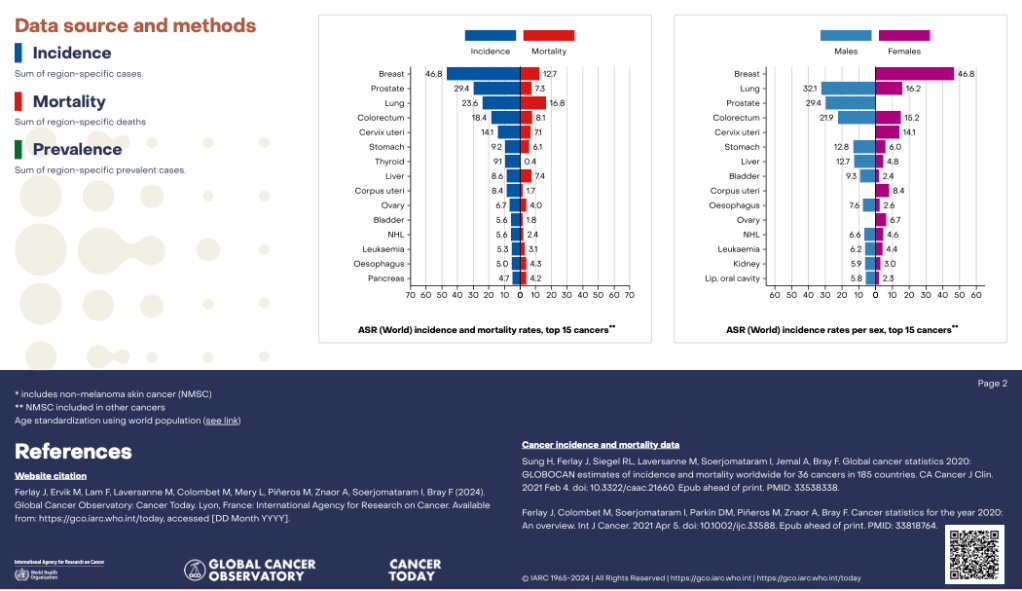
- Lung cancer remains the most commonly diagnosed cancer and the leading cause of cancer death globally.
- Breast cancer is the most frequent cancer among females, contributing significantly to cancer incidence and mortality.
- Colorectal cancer ranks among the top three cancers in both incidence and mortality across genders.
- Cancer incidence and mortality rates differ significantly based on sex and geographic region, emphasizing the need for targeted prevention and treatment strategies.
Key Takeaways:
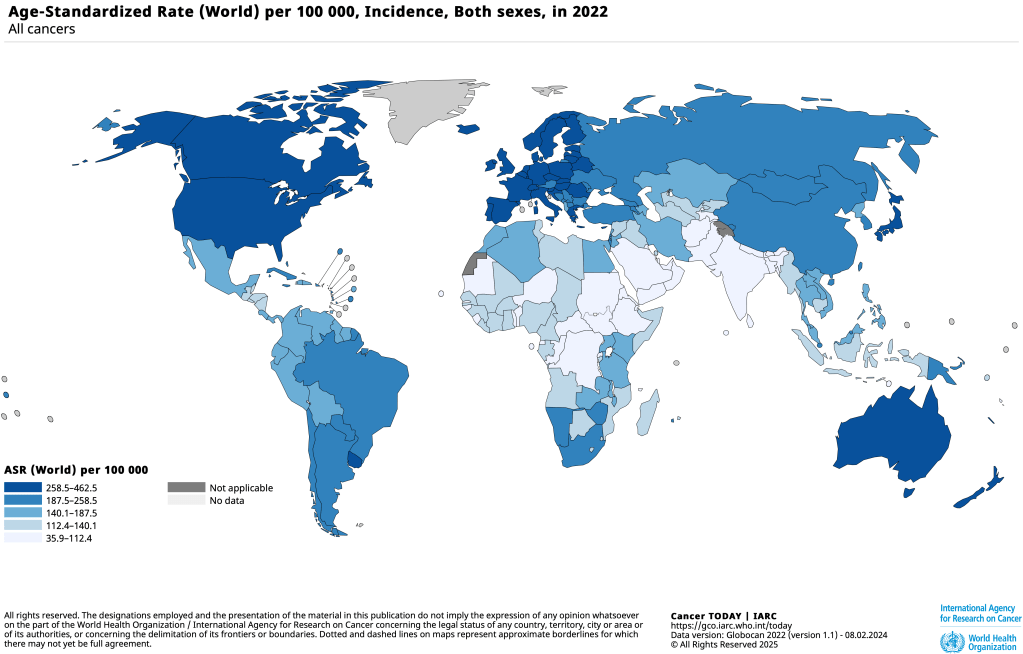
- Higher cancer incidence rates are observed in more developed regions, which may reflect better cancer detection and diagnosis, as well as higher exposure to risk factors such as smoking, obesity, and sedentary lifestyles.
- Lower-income countries tend to report lower cancer incidence rates, but this does not necessarily mean a lower burden—it could indicate underdiagnosis and limited healthcare access.
Key Takeaways:
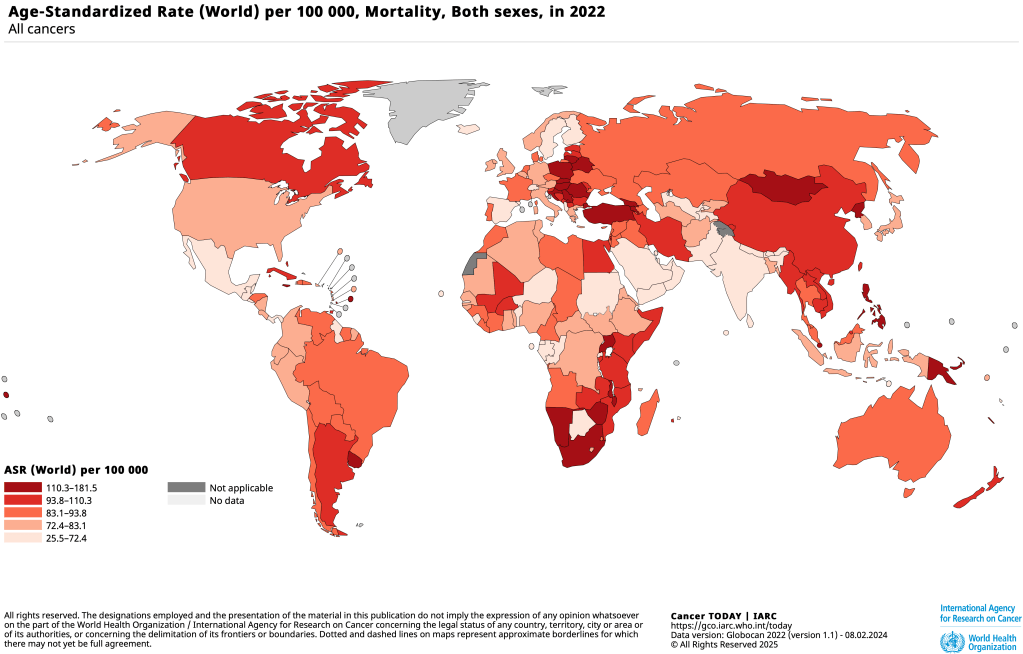
- Developed regions (e.g., North America, Western Europe, Australia) have high cancer incidence but lower mortality, indicating better management and treatment options.
- In contrast, developing regions have lower incidence but higher mortality, reflecting barriers to cancer care and late-stage diagnoses.
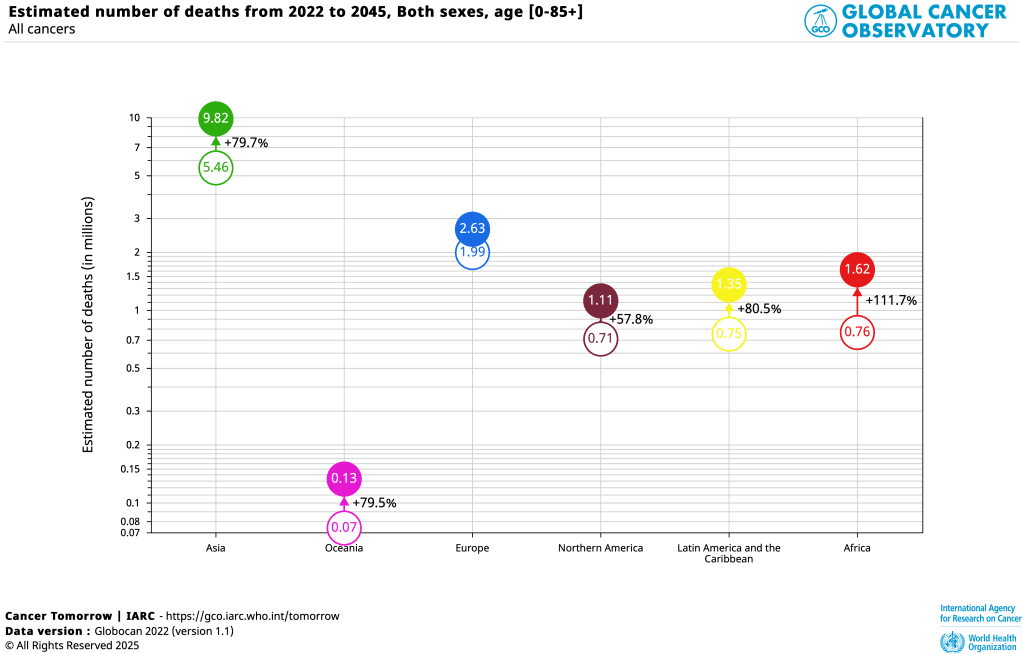
Key Takeaways:
- Cancer-related deaths are projected to increase significantly across all regions by 2045.
- Africa is projected to experience the highest relative increase in cancer deaths. Asia will continue to have the highest absolute number of cancer deaths. Europe and North America are projected to have the slowest increase in cancer mortality.
- The total estimated number of deaths in each region is expected to grow, reflecting aging populations, population growth, and lifestyle-related risk factors.
You can find additional information about cancer statistics by cancer site and US state.
Reviewed. 01/2025
 Within Oncology