

In our previous article, we explored how chronic inflammation contributes to cancer development and how overall eating patterns can help reduce inflammatory processes in the body. We discussed the importance of choosing whole foods over ultra-processed options, emphasizing colorful fruits and vegetables, whole grains, and lean proteins as part of an anti-inflammatory eating approach.
Now, let’s take a closer look at one of the most discussed – and often misunderstood – components of our diet: fatty acids, in short “fats”. Fats play many vital roles in our body. Apart from being a major source of energy, they are essential to absorb specific vitamins1 (A, D, E, and K) and to build fundamental components for our body like hormones, cell membrane and myelin – the insulating sheaths that surround our nerves and increase the speed of communication between our neurons2.
When it comes to inflammation and cancer risk, not all fats are the same for our health. While we previously touched on the importance of choosing “healthy” unsaturated fats and limiting “unhealthy” saturated fats, understanding the specific differences between various types of fats can help everyone make more informed choices at the grocery store and in the kitchen.
The good, the bad and the ugly
Let’s start from the ugly: trans-fats. They can be present in small amounts in some animal products (like cheese, milk, butter and meat), but the bigger problem is the higher amount present in processed food and baked goods. In the United States during the early ‘90s, trans-fats were very commonly present in commercial food as the byproduct of a process called “hydrogenation.” This process was used to prevent fats from becoming rancid – it basically consists in attaching hydrogen molecules to vegetable oils, which turns them into solids and adds shelf life. In 2015, the Food and Drug Administration (FDA) declared them no longer “Generally recognized as safe” and banned their addition to food in the United States3.
Then we have the bad: saturated fats. They have been linked to increased inflammation and also increased risk of heart disease, thus the major health institutions advise limiting their consumption4, 5. Saturated fats are commonly found in red meat, coconut oil, whole milk, and other whole milk dairy like cheese. One easy way to recognize them is that they are generally solid at room temperature.
Finally, the good ones: unsaturated fats. As with all “good” things in life, they are only good in moderation. They come mainly from vegetables, seeds, nuts and fish. Differently from saturated, their oils are generally liquid at room temperature. To understand how the physical status changes in these different types of fats and their implication to our health, we need to take a step back into a quick biochemistry class. Hold tight!
To saturate or not to saturate, that is the question
What does “saturated” and “unsaturated” mean relative to fats? All fats are composed by a main chain of carbon atoms (like a pearl necklace), surrounded by a different amount of hydrogens (like diamonds decorating the pearls). How the carbon and hydrogen atoms are attached to one another, or bonded, differs in the different types of fats (Figure 1)6. These molecular structure differences affect the fats physical status (liquid vs solid), functions in our body (if they are used for helpful things like making cell membrane and hormones, or for bad things like clogging our arteries) and health benefits1. Here’s a detailed explanation of the differences, refer to Figure 1 for a clear visual:
- In saturated fats, all carbon atoms are bonded to the maximum number of hydrogen atoms possible (thus “saturated”), making the chain more rigid and straight. Due to this lean shape, they can be densely packed together and it’s harder to melt them, thus they are solid at room temperature.
- In unsaturated fats, the core chain is not bonded to all hydrogens possible – hence the name “unsaturated,” because there is space for more hydrogens to be attached. Instead of binding a hydrogen, some carbons make a “tighter” double bond with each other. There are actually two versions of unsaturated fats:
- In trans-unsaturated fats (or trans fats – the ugly ones), hydrogens bonded to the carbon double bond are on opposite sides, making the chain linear, like in saturated fats.
- In cis-unsaturated fats (the good ones), hydrogens bind to the carbon on the same side as the double bond, forcing it to bend. This bendy structure makes them less dense than saturated and allows them to remain liquid at room temperature.
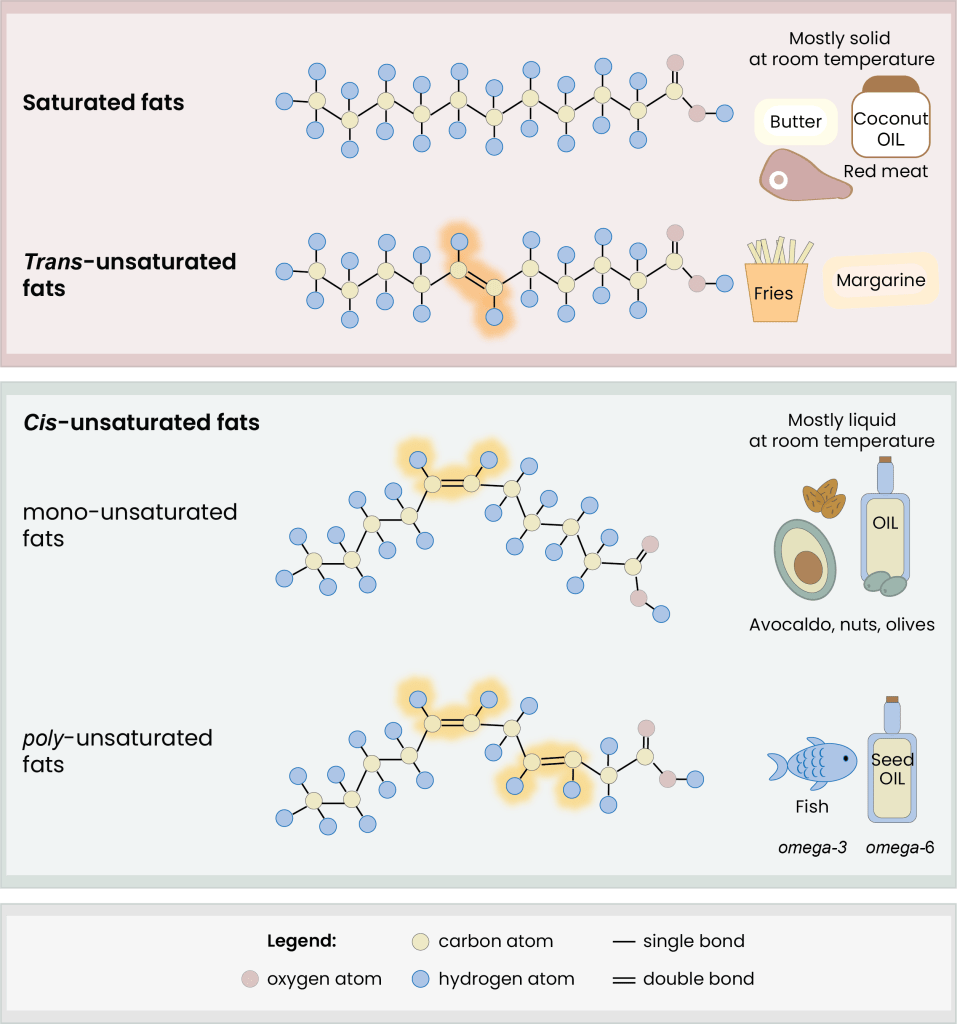
Figure 1. Structure of different types of fats.
Cis-unsaturated fats can be further divided into mono- (one double carbon bond) or poly- (two or more double bonds) unsaturated fats. Mono-unsaturated fats are present in plants and plant oils like olives, avocados, seeds (pumpkin, sesame, sunflower) and nuts (almonds, cashews, peanuts, pecans). Poly-unsaturated fats are commonly known as omega-3 (in oily fish like salmon and mackerel, flaxseeds, walnuts, chia seeds) and omega-6 fatty acids (in vegetable oils like sunflower oil, soybean oils, pumpkin seeds, walnuts)5. Some types of omega-3 and omega-6 fats are called “essential fats” as they cannot be made by your body, so it’s important to include small amounts of them in your diet. Health institutions recommend favouring omega-3 – widely recognized for their anti-inflammatory properties – over omega-6, which seem to have both pro- and anti-inflammatory effects7.
The exact molecular mechanisms that link saturated fat and inflammation are not fully understood, and there are likely multiple pathways that lead from saturated fat to inflammation and cancer. For example, excess saturated fat is linked to obesity, oxidative stress (too many free radicals – unstable molecules that cause cell damage), as well as dysbiosis (imbalance in the ratio between beneficial and harmful bacteria in the gut). All these three factors are known causes of inflammation and can promote cancer development8.
Each meal represents an opportunity to nourish our body with fats that support our health. By understanding what makes fats more “good” or “bad” at the molecular level, we are better equipped to build an eating pattern that reduces inflammation, one healthy fat choice at a time.
The information on this article is for general informational purposes only and does not constitute medical advice. People that have reactions to specific foods, such as allergies, should be careful about changing their diet. Talk to your doctor and qualified health provider about what could be the best nutritional plan for your health.
- National Research Council (US) Committee on Diet and Health. Diet and Health: Implications for Reducing Chronic Disease Risk. Washington (DC): National Academies Press (US); 1989. 11, Fat-Soluble Vitamins. Available from: https://www.ncbi.nlm.nih.gov/books/NBK218749/. ↩︎
- Poitelon Y, Kopec AM, Belin S. Myelin Fat Facts: An Overview of Lipids and Fatty Acid Metabolism. Cells. 2020 Mar 27;9(4):812. doi: 10.3390/cells9040812. PMID: 32230947; PMCID: PMC7226731. ↩︎
- U.S. Food and Drug Administration. (30 April 2024) Trans fats. Fda.gov. Retrieved February 16th 2026 from https://www.fda.gov/food/food-additives-petitions/trans-fat#:~:text=The%20FDA’s%20actions%20include:%20*%20**Removing%20PHOs,*%20Butter%20*%20Cheese%20*%20Meat%20products. ↩︎
- American Cancer Society. (17 October 2025) Anti-inflammatory Diets and Cancer. Cancer.org. Retrieved December 13th 2025 from https://www.cancer.org/cancer/risk-prevention/diet-physical-activity/how-diet-and-physical-activity-impact-cancer-risk/anti-inflammatory-diets-and-cancer.html. ↩︎
- National Health Service.(14 April 2023) Fat: the facts. Nhs.uk Retrieved December 14th 2025 from https://www.nhs.uk/live-well/eat-well/food-types/different-fats-nutrition. ↩︎
- LibreTextsBiology. (n.a.) Lipid Molecules- Introduction. Retrieved February 16th 2026 from https://bio.libretexts.org/Bookshelves/Introductory_and_General_Biology/General_Biology_(Boundless)/03%3A_Biological_Macromolecules/3.03%3A_Lipid_Molecules_-_Introduction. ↩︎
- Gutierres D, Pacheco R, Reis CP. The Role of Omega-3 and Omega-6 Polyunsaturated Fatty Acid Supplementation in Human Health. Foods. 2025 Sep 23;14(19):3299. doi: 10.3390/foods14193299. PMID: 41097470; PMCID: PMC12524211. ↩︎
- Bojková B, Winklewski PJ, Wszedybyl-Winklewska M. Dietary Fat and Cancer-Which Is Good, Which Is Bad, and the Body of Evidence. Int J Mol Sci. 2020 Jun 9;21(11):4114. doi: 10.3390/ijms21114114. PMID: 32526973; PMCID: PMC7312362. ↩︎
© 2025 WithinOncology. All rights reserved.
This article, including all text, tables, and figures, is the intellectual property of WithinOncology and its contributors. Unauthorized reproduction, distribution, or use of any content without explicit written permission is strictly prohibited. For inquiries, please contact us via the contact form.
 Within Oncology
Leave a comment