

Chronic inflammation has emerged as a key biological process linking lifestyle factors – like nutrition – to cancer risk. While temporary inflammation is a natural and essential part of our body’s immune response to infection or injury, chronic inflammation can damage tissues and create an environment that supports cancer development1. Nearly 20% of human cancers are related to chronic inflammation caused by infections, autoimmune disease or exposure to irritants2. These “irritants” include factors like cigarette smoke, but also certain dietary patterns and foods3. What we eat is one of the most modifiable factors influencing inflammation, making it a powerful tool for primary cancer prevention.
Inflammation and cancer: what’s the connection?
Inflammation is the body’s response to infections and injuries and is characterized by swelling, redness, heat and pain. When temporarily and tightly regulated, inflammation is a fundamental protective mechanism that helps the body fight and then recover from pathogens and cancer. Regular function of cells is impaired during inflammation, so gradually returning to a non-inflamed state is a critical part of the healing process. Problems arise when the cause of the inflammation persists or upon failure of regulatory mechanisms to shut it down fail, leading to chronic inflammation.
Persistent inflammatory signaling can promote cancer development and progression through several molecular mechanisms4. These include damage to important cell components like the DNA or impairment of the normal DNA repair processes (leading to mutations), promotion of uncontrolled cell growth, suppression of the immune system’s ability to recognize and eliminate tumor cells (immune surveillance), stimulation of new blood vessel formation (angiogenesis) to feed tumors, and induction of cellular changes that allow cancer cells to become invasive and metastatic4.
Consistent with these mechanisms, decades of epidemiologic research have linked chronic inflammation to increased risk of several cancers, including colorectal, breast, pancreatic, liver, and gastric cancers2. Furthermore, chronic inflammation has been linked to other pathologies like cardiovascular disease, type-2 diabetes and neurodegenerative diseases5 – these connections may represent just the tip of the iceberg.
Anti-inflammatory eating patterns
An anti-inflammatory “diet” is not a strict eating plan, but rather an overall eating pattern that avoids foods known to promote inflammation and is rich in food that help reduce it. This approach closely overlaps with dietary patterns associated with lower cancer risk, such as the Mediterranean diet and the plant forward dietary recommendations from major cancer organizations6.
| Dietary Inflammatory Index (DII) The influence of food on inflammation is based on the components it contains. To measure the effect of diet on inflammation and health outcomes, researchers developed a scoring system, called Dietary Inflammatory Index (DII)7. The DII algorithm evaluates a person’s diet based on its potential to cause inflammation, assigning positive scores to pro-inflammatory foods and negative scores to anti-inflammatory foods. The score is based on scientific evidence linking dietary components to six well‑established biomarkers of inflammation: C-reactive protein (a protein made by the liver, whose level increases during inflammation) and IL-1β, IL-4, IL-6, IL-10, TNF-α (molecules used by the immune system to communicate during inflammation). Using this tool, different studies show that indeed, the risk of cancer – like colorectal cancer- increases linearly with increasing DII score8. |
To boil down years of research into practical guidance, the core principles of an anti-inflammatory eating pattern include9, 10:

Table 1. Principles of anti-inflammatory eating habits.
Building an anti-inflammatory plate.
- Based on guidance from major health institutions, like American Cancer Society (ACS)6 and American Institute for Cancer Research (AICR)9, more in detail practical strategies for an anti‑inflammatory – and overall healthy – eating pattern include:
- Eat a rainbow of fruits and vegetables! The more naturally colorful your meals, the more likely they are to provide a wide range of beneficial nutrients (Figure 1). Fresh, frozen, and canned fruits and vegetables can all be nutritious options. When choosing canned products, be mindful of added salt or sugar and the amount of additives – since some of them have also been linked to inflammation or cancer.
- Prefer whole grains to refined grains. Whole grains like brown rice, quinoa, oats and millet contain anti-inflammatory compounds that are lost during processing (refining).
- Don’t forget about legumes. Legumes (like chickpeas, lentils and beans), together with whole grain food, are a great source of fibers and plant-based proteins.
- Choose lean protein sources, like the above mentioned legumes, or among the animal source of protein prefer fish or poultry.
- Include “healthy fat”. Unsaturated fats are present in extra virgin olive oil, nuts, seeds, and fatty fish (like salmon, sardines and mackerel). Limit the consumption of saturated fats, which are generally present in red meat, cheese, butter, and, – surprise, surprise – in coconut oil. Avoid trans-fat whenever possible (margarine and ultra processed food). One trick to recognize the different types of fat: the more “healthy” (unsaturated) are generally liquid at room temperature, while the other (saturated, trans-fat) are generally solid11, 12.
- Season foods wisely. The benefits of healthy foods like vegetables and fish can be undermined by sauces and dressings high in added sugar or salt. Herbs and spices are a flavorful alternative and several of them (like ginger, garlic, thyme and oregano) are categorized as anti-inflammatory9.
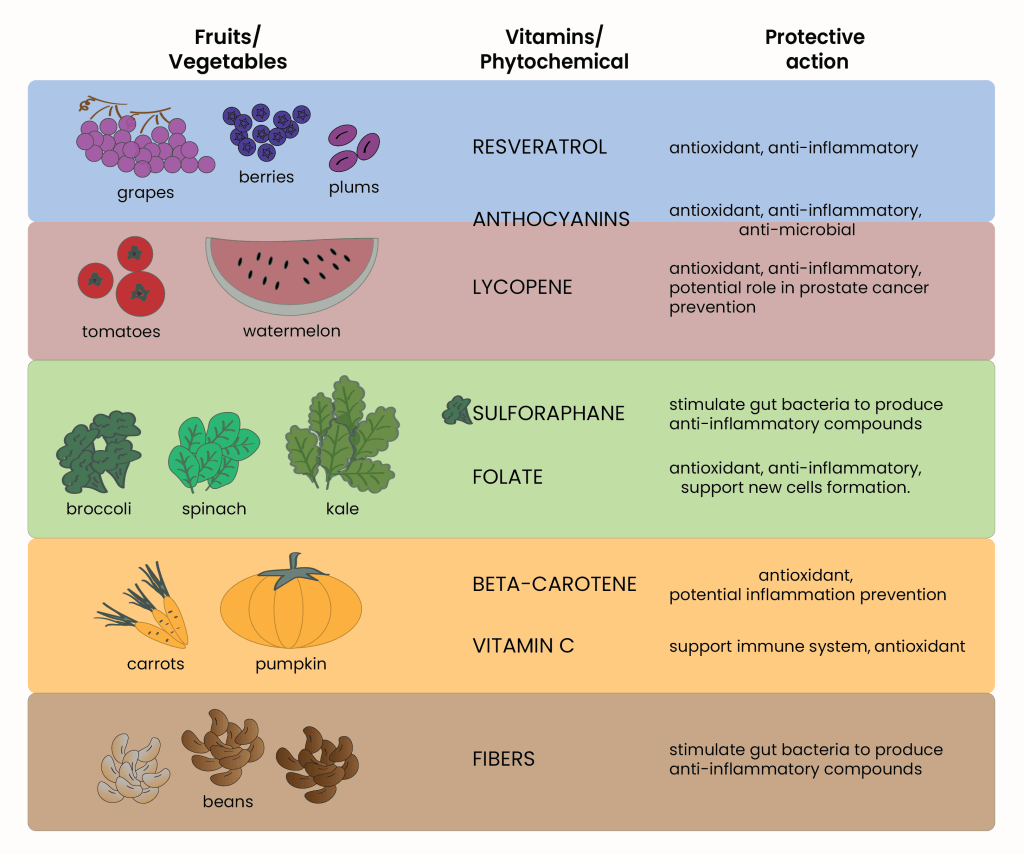
Figure 1. Examples of fruits and vegetables and their protective nutrients. Many are anti-oxidant, meaning they can help protect the cells from damage caused by free radicals – harmful byproducts of many cellular processes.
The black list of pro-inflammatory foods
Limiting pro-inflammatory foods is just as important as adding protective ones6.
- Food high in added sugar. Added sugars are the ones incorporated during food processing to enhance flavor or shelf life (for example, sweetened beverages and store-bought baked goods)13. Dietary Guidelines for Americans recommend limiting added sugars to less than 10% of daily calories.
- Ultra-processed foods (UPF, packaged foods like some baked goods, salty snacks, instant noodles). UPF often combines added sugar, excess salt, refined grains and saturated fats. Furthermore, they often contain other substances that have been linked to inflammation like preservatives14, guar gum15 and some food dyes16.
- Processed meat. These include meats preserved by smoking, curing, salting, or adding preservatives to enhance flavor or extend shelf life (like bacon, hot dogs, salami, ham, deli meats , sausages, pepperoni and jerky). Since 2015, processed meat has been classified as “known carcinogen to humans” (Group 1) by the International Agency for Research on Cancer (IARC), together with other substances like tobacco and asbestos. The preservative in meats and the processing methods creates different carcinogenic compounds, like polycyclic aromatic hydrocarbons (PAHs) which are formed upon smoking of meat. Eating processed meat is linked to increased risk of colorectal cancer, and there is no safe level of consumption according to IARC.
- Red meat. This category includes beef, veal, lamb, goat, and pork – even if pork steak looks white, it is considered “red meat”. Red meat is classified as “probably carcinogenic”(Group 2A) by IARC for the potential of increasing the risk of colon cancer, and should be consumed sparingly, if at all.
| Tips to reduce unhealthy snacking Food with added sugar and saturated fat can be often added to our diets through snacking. Pulling together suggestions from main health institutions6, 17, we distilled a list of suggestions to reduce unhealthy snacking: – Prepare healthy snacks at home so they are easier to take on the go (and you maybe less tempted by the bag of chips at the vending machine). – Choose fruits, vegetables, and whole grains instead of pre-made cakes, candy, or cookies (or if you feel inspired, bake at home!). – Choose whole or cut-up fruits and vegetables, which have more of the original fiber that helps keep you feeling full, rather than more processed versions like juice. – Replace sugary drinks with tea or try adding a wedge of lemon or lime, slices of cucumber, or chopped fruit to your water for flavor. – Read food labels to help you choose foods that support a healthy diet. |
Cooking methods can make a difference
How food is prepared matters, since some cooking processes can lead to the creation of pro-inflammatory and carcinogenic substances. In general, steaming, boiling, baking or quick stir-frying are preferable to deep frying or grilling18.
Bad news for the BBQ lovers! Cooking meat – especially red meat – on the grill can produce heterocyclic aromatic amines (HCAs) when protein and creatine react at high heat. Furthermore, fat dripping onto flames can generate polycyclic aromatic hydrocarbons (PAHs), which may deposit on food and be inhaled through smoke. HCAs and PAHs have been found to be mutagenic (cause changes in DNA that may increase the risk of cancer) and may contribute to chronic inflammation. For reference, PAHs are also found in cigarette smoke and air pollution19.
To reduce risk when grilling, consider marinating meat for at least 30 min (which seems to reduce HCA formation – even if we don’t know exactly how). You can also partially pre-cook it to shorten grill time (the longer the meat is exposed to heat the more HCA is produced), and try to minimize charring. Even better, grill vegetables or low fat fish, taking care to avoid excessive charring that can create benzopyrene and other carcinogens.
For quick meals, microwaving is a safe option: it heats food by activating water molecules and it’s safer than frying or grilling. Heating oils beyond their smoke point should also be avoided, as it can promote the formation of PAH20.
Reducing inflammation – and cancer risk – one meal at a time
An anti-inflammatory eating pattern doesn’t have to be all-or-nothing. Much is still unknown about the role of diet in inflammation, but from what we know so far, it seems that each step toward more anti-inflammatory and healthy choices may help lower cancer risk. Rather than focusing on restriction, the approach suggested by the main health institutions emphasizes abundance and variety, supporting sustainable long-term eating habits that are likely to reduce inflammation.
Reducing cancer risk and inflammation also involves other evidence based strategies, including regular physical activity, maintaining a healthy body weight, and avoiding tobacco and alcohol21. All these strategies will be helpful for overall health benefits and also help to prevent other pathologies like cardiovascular disease5. For individuals living with or beyond cancer, anti-inflammatory eating may help manage treatment related side effects and improve quality of life, although dietary changes should always be personalized and discussed with healthcare professionals.
The information on this article is for general informational purposes only and does not constitute medical advice. People that have reactions to specific foods, such as allergies, should be careful about changing their diet. Talk to your doctor and qualified health provider about what could be the best nutritional plan for your health.
- Crusz SM, Balkwill FR. Inflammation and cancer: advances and new agents. Nat Rev Clin Oncol. 2015 Oct;12(10):584-96. doi: 10.1038/nrclinonc.2015.105. Epub 2015 Jun 30. PMID: 26122183. ↩︎
- Kundu JK, Surh YJ. Inflammation: gearing the journey to cancer. Mutat Res. 2008 Jul-Aug;659(1-2):15-30. doi: 10.1016/j.mrrev.2008.03.002. Epub 2008 Mar 16. PMID: 18485806. ↩︎
- Singh N, Baby D, Rajguru JP, Patil PB, Thakkannavar SS, Pujari VB. Inflammation and cancer. Ann Afr Med. 2019 Jul-Sep;18(3):121-126. doi: 10.4103/aam.aam_56_18. PMID: 31417011; PMCID: PMC6704802. ↩︎
- Greten FR, Grivennikov SI. Inflammation and Cancer: Triggers, Mechanisms, and Consequences. Immunity. 2019 Jul 16;51(1):27-41. doi: 10.1016/j.immuni.2019.06.025. PMID: 31315034; PMCID: PMC6831096. ↩︎
- Chavda VP, Feehan J, Apostolopoulos V. Inflammation: The Cause of All Diseases. Cells. 2024 Nov 18;13(22):1906. doi: 10.3390/cells13221906. PMID: 39594654; PMCID: PMC11592557. ↩︎
- American Cancer Society. (17 October 2025) Anti-inflammatory Diets and Cancer. Cancer.org. Retrieved December 13th 2025 from https://www.cancer.org/cancer/risk-prevention/diet-physical-activity/how-diet-and-physical-activity-impact-cancer-risk/anti-inflammatory-diets-and-cancer.html. ↩︎
- Hébert JR, Shivappa N, Wirth MD, Hussey JR, Hurley TG. Perspective: The Dietary Inflammatory Index (DII)-Lessons Learned, Improvements Made, and Future Directions. Adv Nutr. 2019 Mar 1;10(2):185-195. doi: 10.1093/advances/nmy071. PMID: 30615051; PMCID: PMC6416047. ↩︎
- Jayedi A, Emadi A, Shab-Bidar S. Dietary Inflammatory Index and Site-Specific Cancer Risk: A Systematic Review and Dose-Response Meta-Analysis. Adv Nutr. 2018 Jul 1;9(4):388-403. doi: 10.1093/advances/nmy015. PMID: 30032224; PMCID: PMC6054175. ↩︎
- American Institute for Cancer Research. (18 August 2021) Can an Anti-Inflammatory Diet Reduce Cancer Risk? Aicr.org Retrieved December 13th 2025 from https://www.aicr.org/resources/blog/can-an-anti-inflammatory-diet-reduce-cancer-risk/#:~:text=Is%20an%20Anti%2DInflammatory%20Diet,to%20risk%20of%20colorectal%20cancer. ↩︎
- Stanford lifestyle medicine. (8 April 2024) What is Fiber and Why is it Important for the Microbiome? Lifestylemedicine.stanford Retrieved December 14th 2025 from https://lifestylemedicine.stanford.edu/what-is-fiber-and-why-is-it-important-for-the-microbiome/. ↩︎
- Scripps Health. (24 July 2025) Healthy Fats vs Unhealthy Fats. Scripps.org Retrieved December 14th 2025 from https://www.scripps.org/news_items/4359-healthy-fats-vs-unhealthy-fats. ↩︎
- National Health Service.(14 April 2023) Fat: the facts. Nhs.uk Retrieved December 14th 2025 from https://www.nhs.uk/live-well/eat-well/food-types/different-fats-nutrition/. ↩︎
- Ma X, Nan F, Liang H, Shu P, Fan X, Song X, Hou Y, Zhang D. Excessive intake of sugar: An accomplice of inflammation. Front Immunol. 2022 Aug 31;13:988481. doi: 10.3389/fimmu.2022.988481. PMID: 36119103; PMCID: PMC9471313. ↩︎
- Whelan K, Bancil AS, Lindsay JO, Chassaing B. Ultra-processed foods and food additives in gut health and disease. Nat Rev Gastroenterol Hepatol. 2024 Jun;21(6):406-427. doi: 10.1038/s41575-024-00893-5. Epub 2024 Feb 22. PMID: 38388570. ↩︎
- Nair DVT, Paudel D, Prakash D, Singh V. Food Additive Guar Gum Aggravates Colonic Inflammation in Experimental Models of Inflammatory Bowel Disease. Curr Dev Nutr. 2021 Jun 7;5(Suppl 2):1142. doi: 10.1093/cdn/nzab061_026. PMCID: PMC8180737. ↩︎
- Rothman Orthopedics. (1 February 2025). The Impact of Food Dyes on Inflammation, Pain, and Orthopedic Surgery Recovery. Rothmanortho.com. Retrieved December 21st 2025 from https://rothmanortho.com/stories/blog/the-impact-of-food-dyes-on-inflammation-pain-and-orthopedic-surgery-recovery. ↩︎
- Mayo Clinic Comprehensive Cancer Center Blog. (17 February 2025) Want to reduce chronic inflammation? Start with your grocery list. cancerblog.mayoclinic.org. Retrieved December 14th 2025 from https://cancerblog.mayoclinic.org/2025/02/17/want-to-reduce-chronic-inflammation-start-with-your-grocery-list/. ↩︎
- American Institute for Cancer Research. (6 July 2021) Practicing Safe Grilling Can Reduce Cancer Risk, Experts Say. Aicr.org Retrieved December 13th 2025 from https://www.aicr.org/news/practicing-safe-grilling-can-reduce-cancer-risk-experts-say/. ↩︎
- NIH National Cancer Institute (11 July 2017). Chemicals in Meat Cooked at High Temperatures and Cancer Risk. cancer.gov Retrieved December 20th 2025 from https://www.cancer.gov/about-cancer/causes-prevention/risk/diet/cooked-meats-fact-sheet. ↩︎
- Lin C, Huang RJ, Duan J, Zhong H, Xu W. Polycyclic aromatic hydrocarbons from cooking emissions. Sci Total Environ. 2022 Apr 20;818:151700. doi: 10.1016/j.scitotenv.2021.151700. Epub 2021 Nov 16. PMID: 34798089. ↩︎
- American Cancer Society. (20 October 2025) American Cancer Society Guideline for Diet and Physical Activity for Cancer Prevention Cancer.org. Retrieved December 13th 2025 from https://www.cancer.org/cancer/risk-prevention/diet-physical-activity/acs-guidelines-nutrition-physical-activity-cancer-prevention.html. ↩︎
© 2025 WithinOncology. All rights reserved.
This article, including all text, tables, and figures, is the intellectual property of WithinOncology and its contributors. Unauthorized reproduction, distribution, or use of any content without explicit written permission is strictly prohibited. For inquiries, please contact us via the contact form.
 Within Oncology
Leave a comment